About the Project
If you listen to enough early jazz and popular music from the 1920s and 1930s, the queerness in the songs is unmistakable. Hundreds of recordings survive that feature male vocalists pining over men, female singers telling lustful stories of beautiful women, and lyrics that altogether complicate a gender binary.
Though the reasons these songs exist are complex, the following five aspects of US and UK social and performance culture are key. Each contributing cause corresponds to an exhibit:
- Queer people were part of their creation and reception
- Vocalists sang popular songs, often with little regard to gender
- Performers commonly took on the role of a narrator
- Singing as and about characters was a big part of music
- Audiences did not always connect performances to identities
From oopsie gaysie songs that were certainly intentional, to those that played with gender for comic effect, to others that were largely incidental, each tune tells us more about the era. By placing the recordings in the context of history, we can discover how these sometimes sonically surprising songs were once possible and plentiful, and why their wide acceptance would fade into the past.
“The first time I heard an oopsie gaysie was in 2015, as I searched through old big band recordings. I pressed play on a song by a vocalist I hadn't heard of before, and I couldn't believe my ears. She was singing about wanting to marry another woman.
I felt shocked, elated, and I had so many questions about this seemingly rare find from almost a hundred years ago. In a world still filled with straight songs... How? Why? And where could I listen to more!? As I searched through old albums, my MP3 collection slowly grew to dozens of similar songs. It became a passion to find moments of queerness from the past, though I still couldn't answer my first two questions.
After months of searching, I came across JD Doyle's radio show on cross vocals. It was then I knew that I wasn't alone in my fascination and I finally had a name for these songs that had become so important to me. As years went by my collection grew into the hundreds, and I gradually started to piece together the many complicated factors that shaped the music. I knew this project was worth sharing with the world.
With an endless thanks to the Oopsie Gaysie team for helping turn this vision into a reality, I hope this archive and its accompanying exhibits can serve as a resource for many people and for many reasons: for those researching or curious about music and/or LGBTQ history, as a place for DJs, dancers, and musicians to go to thoughtfully expand their playlists and repertoires, and most of all, for other queer people to find songs from the past that mean something just as special to them.”

Effie Ralli is a public historian, musician,
and museum educator from the US and UK
The team
Research, Writing, Content DesignEffie Ralli
Web Design & Development Dillan Tai
Layout Consulting, Graphic DesignHelen Ralli
AnimationVicky Lee Instagram
With special thanks to the Public History department and MA cohort at Royal Holloway, University of London for their feedback and support.

Recommended Reading
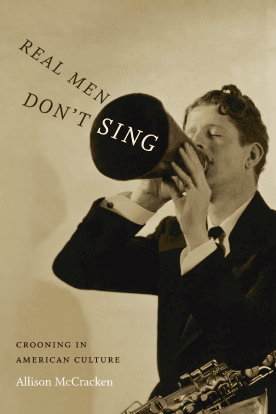
Real Men Don't Sing: Crooning in American Culture
Allison McCracken
Duke University Press, 2015
A fascinating dive into the archives of American crooner Rudy Vallée, this is a must-read for anyone interested in gender and vocal performance in the 1920s and 1930s. Considers the importance of pronouns and contains much historical context for the rise of crooner culture, and the eventual backlash against male singers whose voices showcased sensitivity.
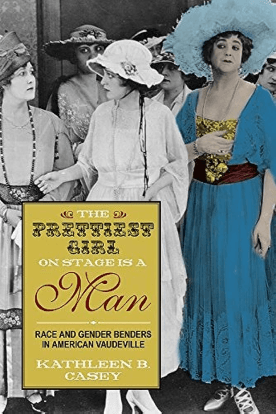
The Prettiest Girl on Stage Is a Man: Race and Gender Benders in American Vaudeville
Kathleen B. Casey
University of Tennessee Press, 2015
A thought-provoking read, this book takes a close look at the interplay of identities on and off stage for four early-twentieth-century vaudeville performers. The story of their cross-race and gender performances tells us much about how these categories were perceived around the time of the key age of popular music that would follow.
Blues Legacies and Black Feminism: Gertrude “Ma” Rainey, Bessie Smith, and Billie Holiday
Angela Davis
Vintage, 1999
Saying It With Songs: Popular Music & The Coming of Sound to Hollywood Cinema
Katherine Spring
Oxford University Press, 2013
Selling Sounds: The Commercial Revolution in American Music
David Suisman
Harvard University Press, 2009
“White Face, Black Voice: Race, Gender, and Region in the Music of the Boswell Sisters.”
Laurie Stras
Journal of the Society of American Music, 1(2) 207-255, 2007.
“Transgender Passing Guides and the Vocal Performance of Gender and Sexuality”
Stephan Pennington
Oxford Handbook of Music and Queerness, 238-275, 2018
Gay L.A.: A History of Sexual Outlaws, Power Politics, and Lipstick Lesbians
Lillian Faderman and Stuart Timmons
Basic Books, 2006